


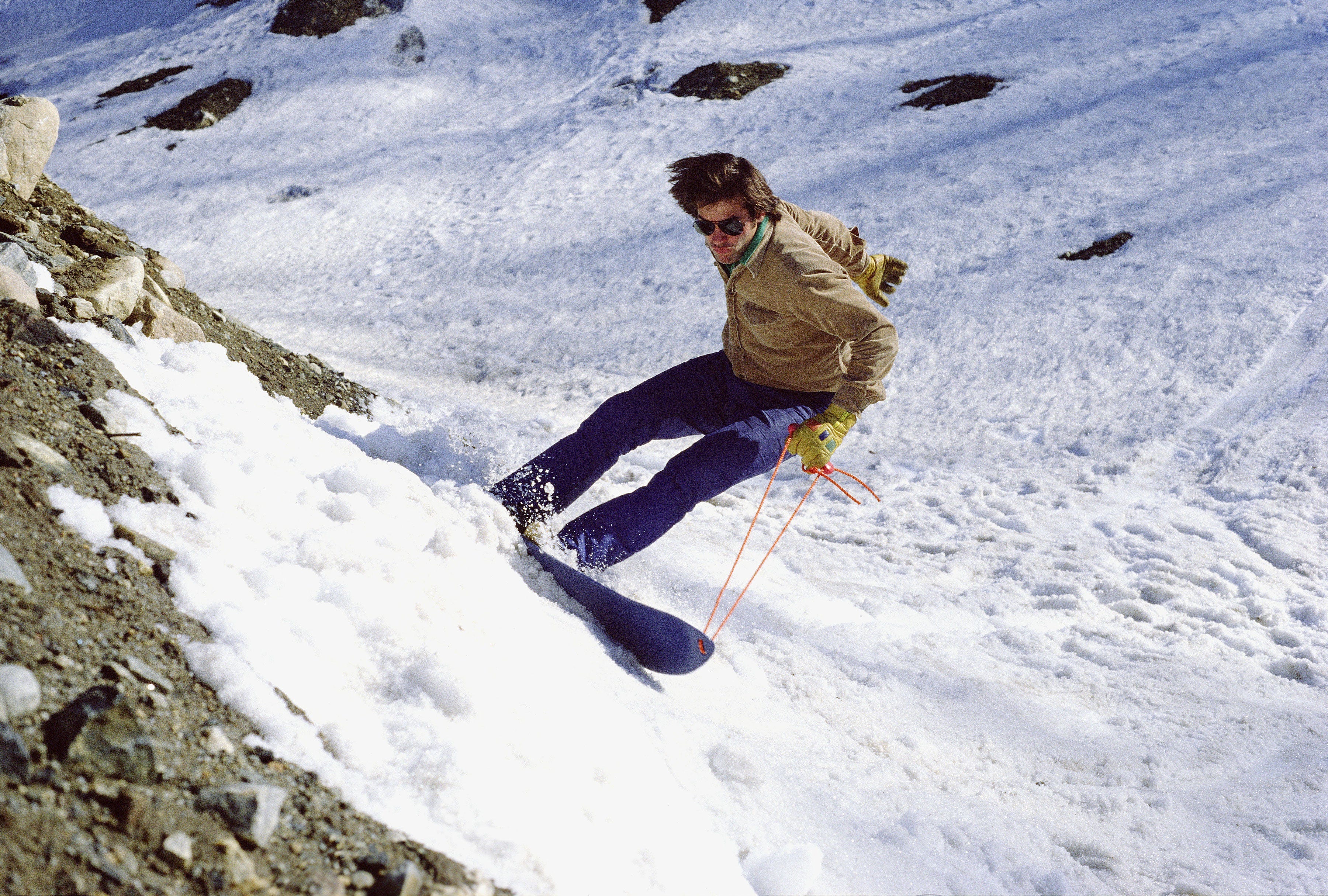
Fifty years ago, Jake Burton Carpenter was making boards in Vermont and trying to convince people that standing sideways on snow wasn’t a fad. Today, Burton Snowboards is a global company with its own retail stores, international distribution, an enormous product catalog and a name that reaches far beyond snowboarding. Getting from there to here is one of the great stories in action sports, but Burton has now reached the point where the story gets more complicated.
On September 8, the company named Denny Bruce its new CEO, effective September 21. Bruce actually worked for Burton from 2003 to 2005 before moving through leadership roles at Vans, Skullcandy, Dickies and Gozney. Burton owner Donna Carpenter, who had served as interim CEO since June, remains chairman. Two days later, Burton officially kicked off its 50th anniversary with the first of five product drops covering different eras of its history.
Those announcements happening in the same week feels appropriate. One is about Burton’s past. The other is about its future. And the next part may actually be harder.
I Saw Burton From the Inside
I have a little more history with this story than the average observer. I was the Softgoods Design Director at Burton Snowboards from 1999 through 2003, during what I still consider one of the golden ages of snowboarding.
That was a period when the culture, product, athletes, magazines, videos and brands all seemed to be feeding off one another at the same time. Snowboarding was growing fast, but it had not yet been completely cleaned up and packaged for everybody. I was part of the team that launched Analog, and I was there as Burton’s Bio-Lite softgoods program evolved into Ronin and Radar.
What stands out looking back isn’t simply the products. It’s that Burton was willing to experiment. There was room for different identities inside the company, different aesthetics, different riders and different ideas about where snowboarding was going. That willingness to take risks is part of why Burton mattered, and it’s also why the question surrounding its next chapter is more interesting than simply who sits in the CEO’s office.
Burton Already Won
There was a time when Burton’s biggest challenge was convincing ski areas to let snowboarders ride. Think about how absurd that sounds now (with the exception of three lame-ass resorts).
Jake Burton Carpenter founded the company in 1977, when snowboarding barely qualified as an industry. Burton went on to help develop the equipment, support riders and push resorts to accept a sport that many of them initially wanted nothing to do with. Snowboarding won that fight. Burton won too.
Now comes a problem nobody worries about while they’re fighting the establishment: What happens when you become the establishment?
Burton isn’t the disruptive little snowboard company anymore. It’s the biggest snowboard company. That is an extraordinary achievement, but it’s also where things get dangerous.
The New CEO’s Résumé Tells You Something
Bruce isn’t an obvious caretaker appointment. His career since leaving Burton is almost a case study in the exact problem Burton now needs to solve. He has worked with companies that started with strong subcultural or utilitarian identities and then expanded far beyond their original audiences. More recently, he helped turn Gozney from a primarily European DTC business into a broader global omnichannel company.
Burton itself emphasized Bruce’s experience across wholesale, DTC and international distribution. More revealingly, the company said his mandate includes building the commercial architecture for Burton’s next phase of growth while protecting its relationship with core riders.
That’s the entire challenge in one sentence. Burton doesn’t need somebody to figure out how to make snowboards. It needs somebody to figure out how a culturally important snowboard company continues growing as a global consumer business without eventually becoming just another global consumer business.
Those aren’t the same thing.
Every Core Brand Eventually Faces This
The pattern is familiar in action sports. The core gives a brand credibility. Credibility attracts a larger audience. The larger audience creates growth. And eventually someone asks the obvious question: How much bigger can this get?
That’s when things can go sideways.
Snowboarding has watched brands expand far beyond the communities that originally gave them relevance. Sometimes they become enormous businesses. Sometimes the logo survives while everything interesting about the brand disappears. Burton has avoided that fate better than most.
One reason is structural. It remains privately held and owned by Donna Carpenter rather than answering to public shareholders. But private ownership doesn’t make the tension disappear. Burton still needs new customers. It still needs existing snowboarders to buy new equipment. It has to balance its own stores and website with independent snowboard retailers. It has to compete with both specialist snowboard companies and enormous outdoor brands.
And it somehow needs to remain relevant to a 20-year-old snowboarder without making the 45-year-old who’s been riding Burton boards since the ‘90s feel like the company no longer understands them.
That’s not easy.
The Archive Is Incredibly Valuable
Burton’s anniversary campaign demonstrates one advantage that can’t simply be purchased: history.
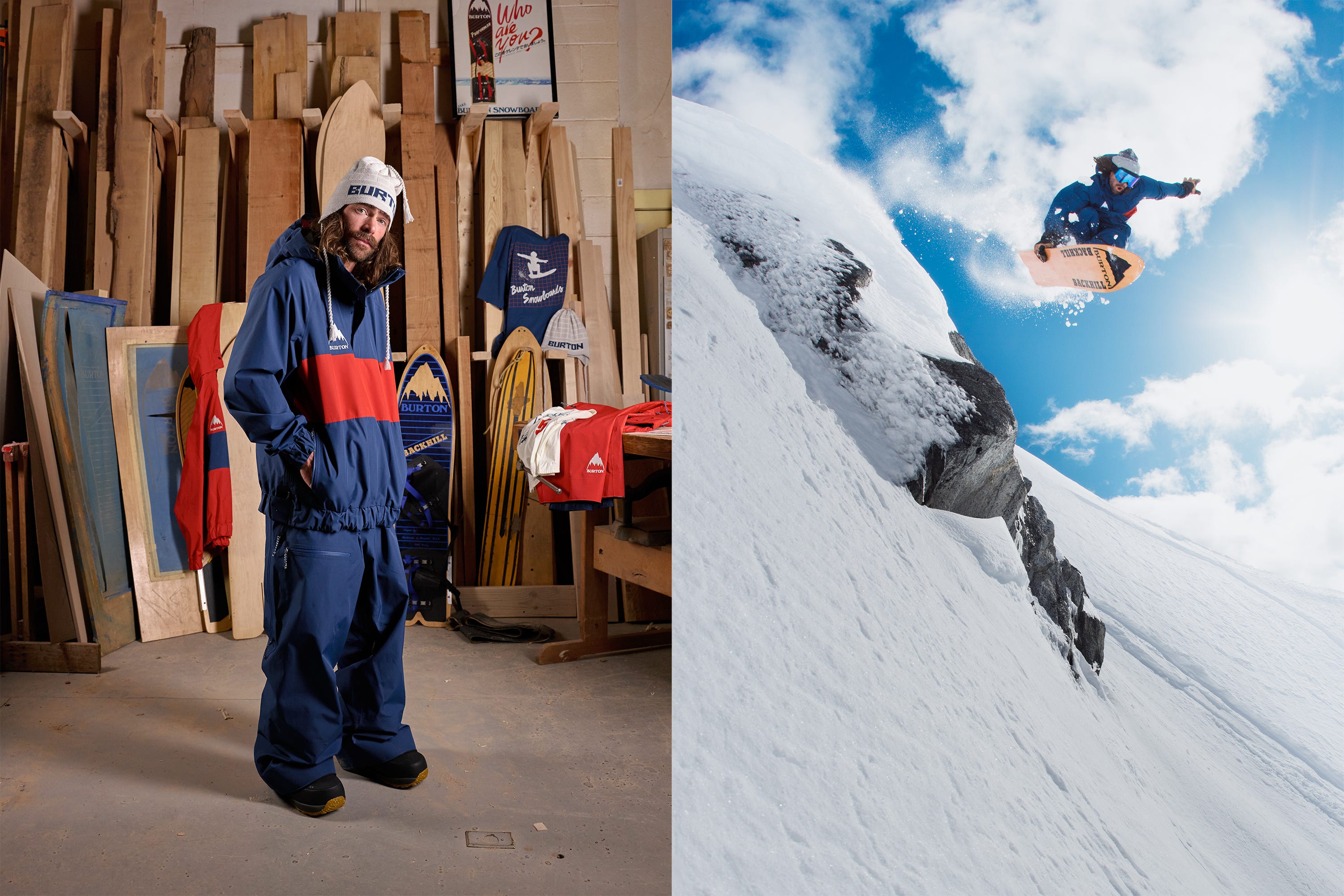
The first anniversary release goes all the way back to 1977 through 1987, with Burton revisiting pieces of its early product history while updating them for today. Then the company will move through four more eras of snowboarding.
That’s smart. There are riders today who remember when snowboarders weren’t welcome at many resorts. There are riders who grew up watching Craig Kelly. There are people whose first serious snowboard was a Burton Air, Custom or Balance. And there are kids riding Burton today whose parents weren’t alive when Jake started the company.
Very few snowboard brands can reach all of those people through their own history.
But history can also become a trap. The easiest way for a heritage company to announce that its best years are behind it is to spend all its time telling everyone how great things used to be. Burton’s archive matters only if it becomes a foundation for what comes next rather than a museum of what came before.
The Product Still Has to Be Weird
One encouraging thing about Burton is that despite its size, parts of the snowboard line remain decidedly specialized. Look at the Family Tree collection. There are directional boards, powder shapes, aggressive camber profiles and products designed for riders with very specific ideas about how they want to move through terrain.
That isn’t product designed to maximize the addressable market.
Good.
Because snowboarding doesn’t need Burton to optimize every snowboard for everybody. It needs the biggest company in snowboarding to retain enough confidence to make products that won’t necessarily make sense to everyone. The strange boards. The aggressive boards. The boards built because one great snowboarder wanted something different.
That matters.
I saw the same mentality on the softgoods side during my years there. Analog wasn’t created because Burton needed another generic apparel label. Ronin and Radar weren’t about making everything look the same. The interesting work happened when the company was willing to create distinct identities inside the larger Burton universe.
That kind of creative tension is worth protecting.
Snowboarding Doesn’t Need Another Lifestyle Brand
This is where Burton’s next chapter becomes important beyond Burton. The snowboard industry doesn’t particularly need the company to become a bigger lifestyle brand. There are plenty of lifestyle brands.
It needs Burton to remain a snowboard company that happens to be big.
There’s a difference.
That means continuing to invest in equipment, supporting snowboarders who may never become household names, backing shops and events, helping people get into snowboarding, developing products that won’t necessarily appeal to millions of consumers, and occasionally doing things that make absolutely no sense to somebody looking at snowboarding exclusively through a spreadsheet.
Some irrationality is healthy.
Snowboarding itself was irrational. Nobody needed to invent a sideways way to slide down a mountain. People did it because it was fun.
Fifty Years Is Worth Celebrating
Core snowboarders can be cynical about big brands. Sometimes that cynicism is deserved. But Burton reaching 50 years is objectively remarkable.
Snowboard companies disappear constantly. They run out of money. Founders leave. They get acquired. Distribution collapses. Product slips. Trends change. Retailers move on.
Burton survived snowboarding’s explosive growth. It survived consolidation. It survived the rise of online retail and DTC. It survived the death of its founder. And it’s still privately owned.
That’s worth recognizing.
For me, there’s another layer to it. I was fortunate enough to spend four years inside Burton while snowboarding was exploding culturally. I watched the company launch ideas, kill ideas, reinvent categories and try things that weren’t guaranteed to work.
That’s the Burton worth remembering.
Not because everything from that era needs to be recreated. It doesn’t. But because the willingness to experiment was part of what made the company important in the first place.
Burton spent its first 50 years helping snowboarding go from something resorts wouldn’t allow to a global sport and culture. Its next challenge may be almost the opposite: Can the company keep snowboarding interesting now that snowboarding is established?
Denny Bruce takes over a business with more resources, recognition, history and reach than Jake Burton Carpenter could possibly have imagined.
That’s the opportunity.
It’s also the risk.
Because growing Burton is easy to understand.
Growing Burton without becoming less Burton is the hard part.
Great read. Since, I haven’t started yet and truly don’t know the problem we are trying to solve, I loved this point of view and agree. It’s appreciated. The one thing I know is that Burton has been good for snowboarding and any of us that are a part of the culture want to see snowboarding continue to grow and progress. Once a subculture of sliding on snow, today it’s filled with sub-cultures of park and pipe riders, powder seekers, split-boarders, snow surfers, soul seekers, the list goes on…I learned a beautiful phrase during my time with Vans that is both relevant for this article and our community. “Open to anyone…but, not for everyone….”
This is a cool post. I like how you have experience inside Burton during a phenomenal era of snowboarding. I'm curious why Burton doesn't make skis, however. Will snowboarders find that such a turnoff? Would anyone really care aside from some 18-year-old bro with a chip on their shoulder. I doubt it.