


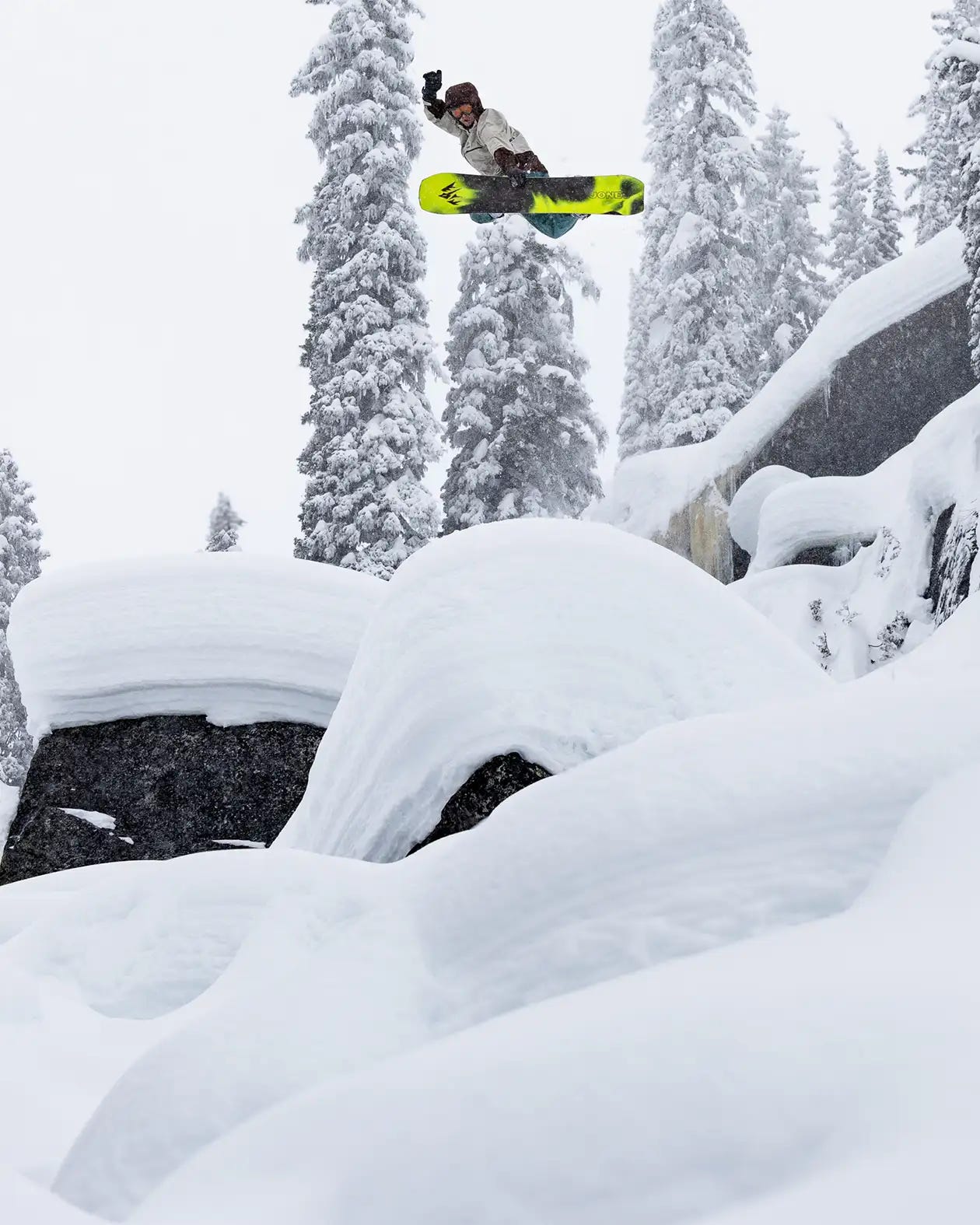
Full disclosure upfront: this isn’t a lap or two around the block take. I’ve been riding the Jones Howler and Mercury FASE bindings all season at Park City Mountain Resort, in everything from early corduroy to wind crust to the powder days the Wasatch actually delivered this winter. So here’s where things actually land after some real mileage.
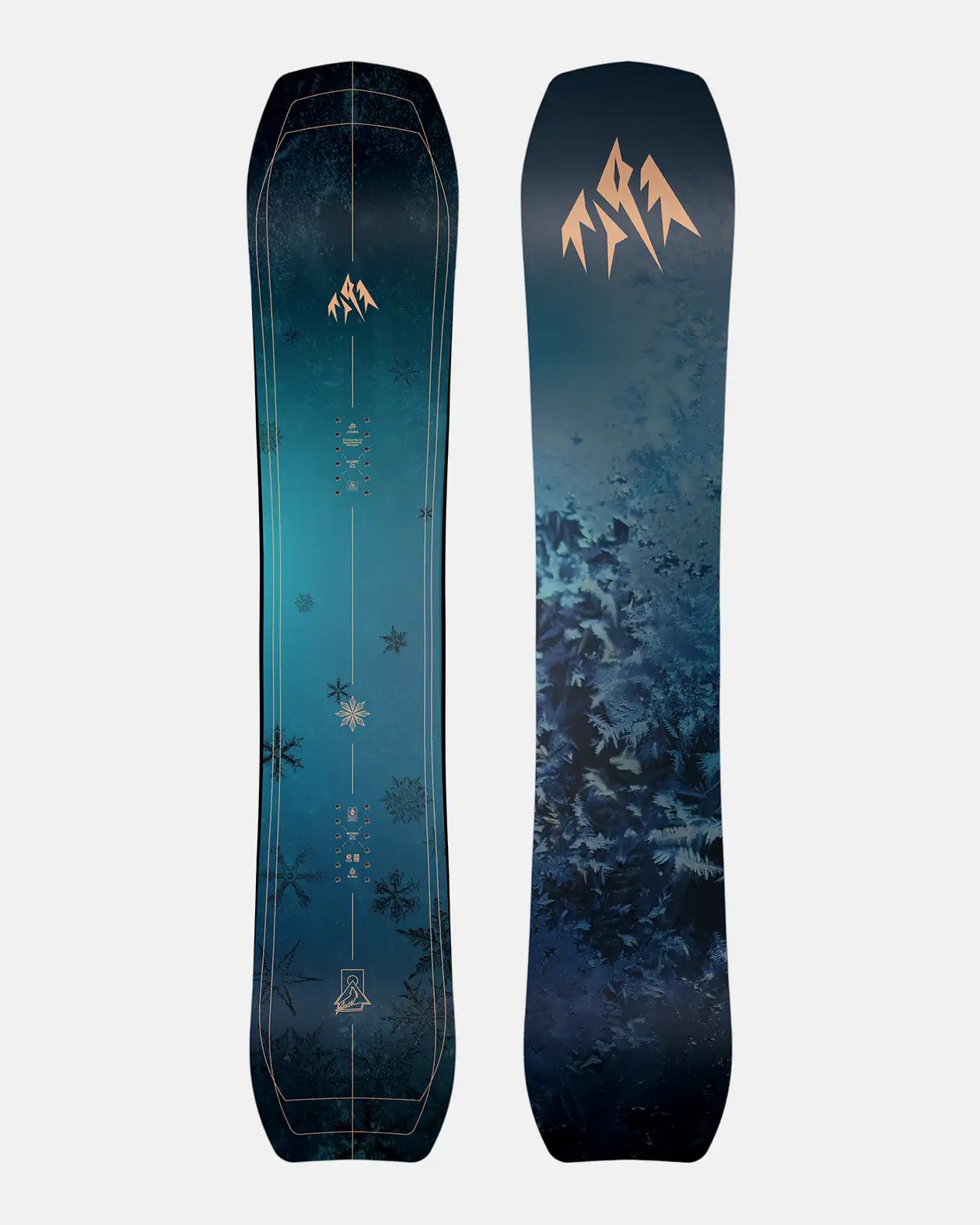
The Howler
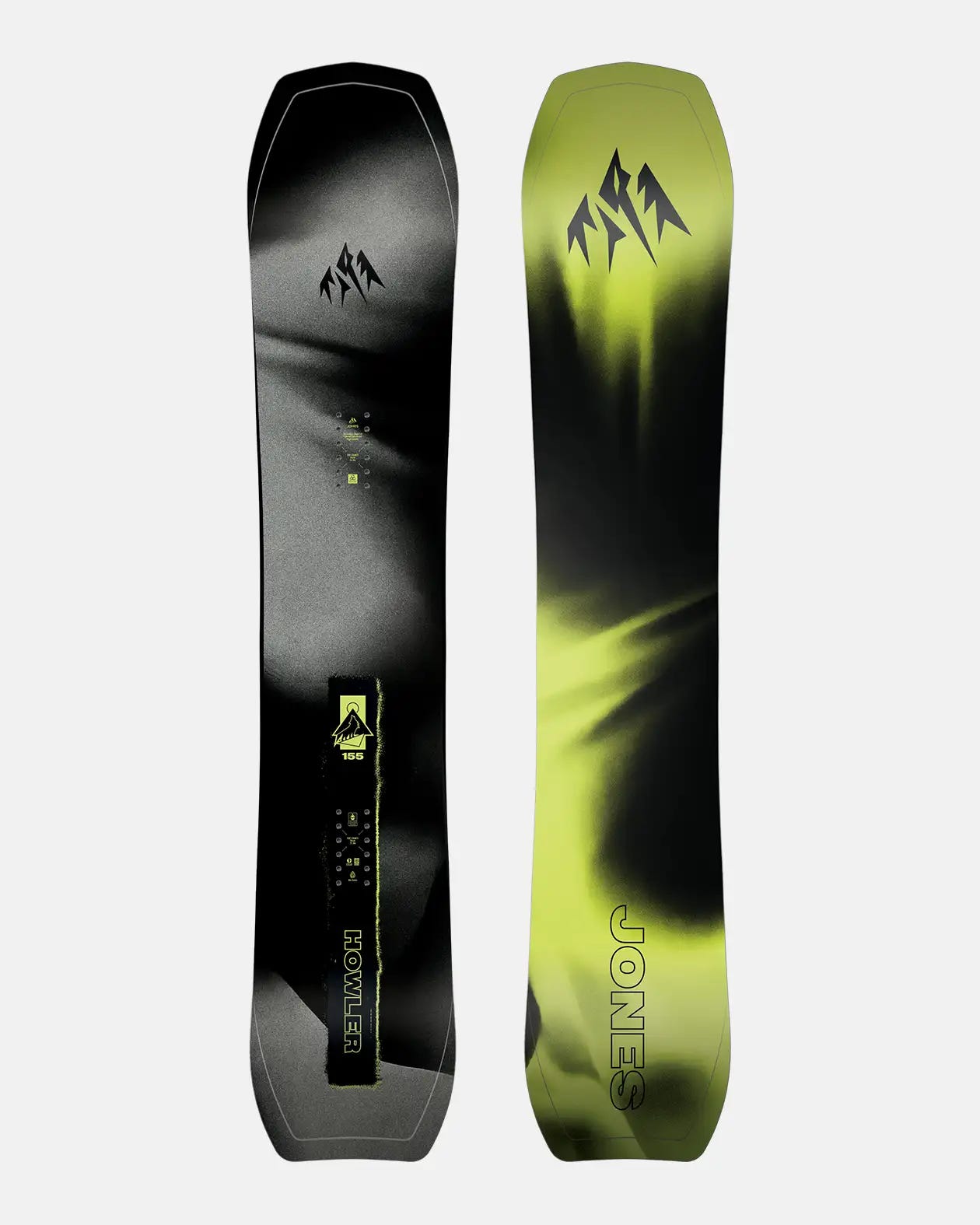
The Howler is a new model for ‘26, a directional freeride board designed in collaboration with Victor de Le Rue and Elena Hight, and it shows. This thing was built with serious terrain in mind, but the design stops short of being a dedicated freeride sled. It’s got a blunted, minimally tapered shape that keeps switch riding honest, and a high full-camber profile that gives the tail real authority at takeoff and genuine stability on landing. The mid-stiff flex (think a 4 out of 5) is in that sweet spot where the board doesn’t feel locked up but will absolutely hold an edge when you ask it to.
What’s notable is how well it actually carves for a directional shape. The thing rips a clean turn on hardpack and groomers without feeling twitchy or demanding. The construction deserves some credit here: Koroyd in the nose section kills swing weight and keeps the front end from getting wobbly in variable snow, while Bcomp Carbon/Flax stringers under the bindings suck up chatter and add the kind of torsional stiffness you want when the mountain gets sketchy. The core is a triple-density bamboo, paulownia, and poplar mix that keeps the board lively without making it nervous.
The tapered directional shape means the nose has more real estate than the tail, which is the right call for float, but the tail is still kicked up enough that riding switch is a non-issue. This is genuinely a quiver-killer for the rider who wants one board to handle all-mountain duty, park laps, and the occasional steeper excursion. Jones built it to be ridden shorter than a traditional freeride board, too, which gives it an agility you wouldn’t expect from a board with this kind of stability at speed.
MSRP: $699.95 | jonessnowboards.com
Mercury FASE
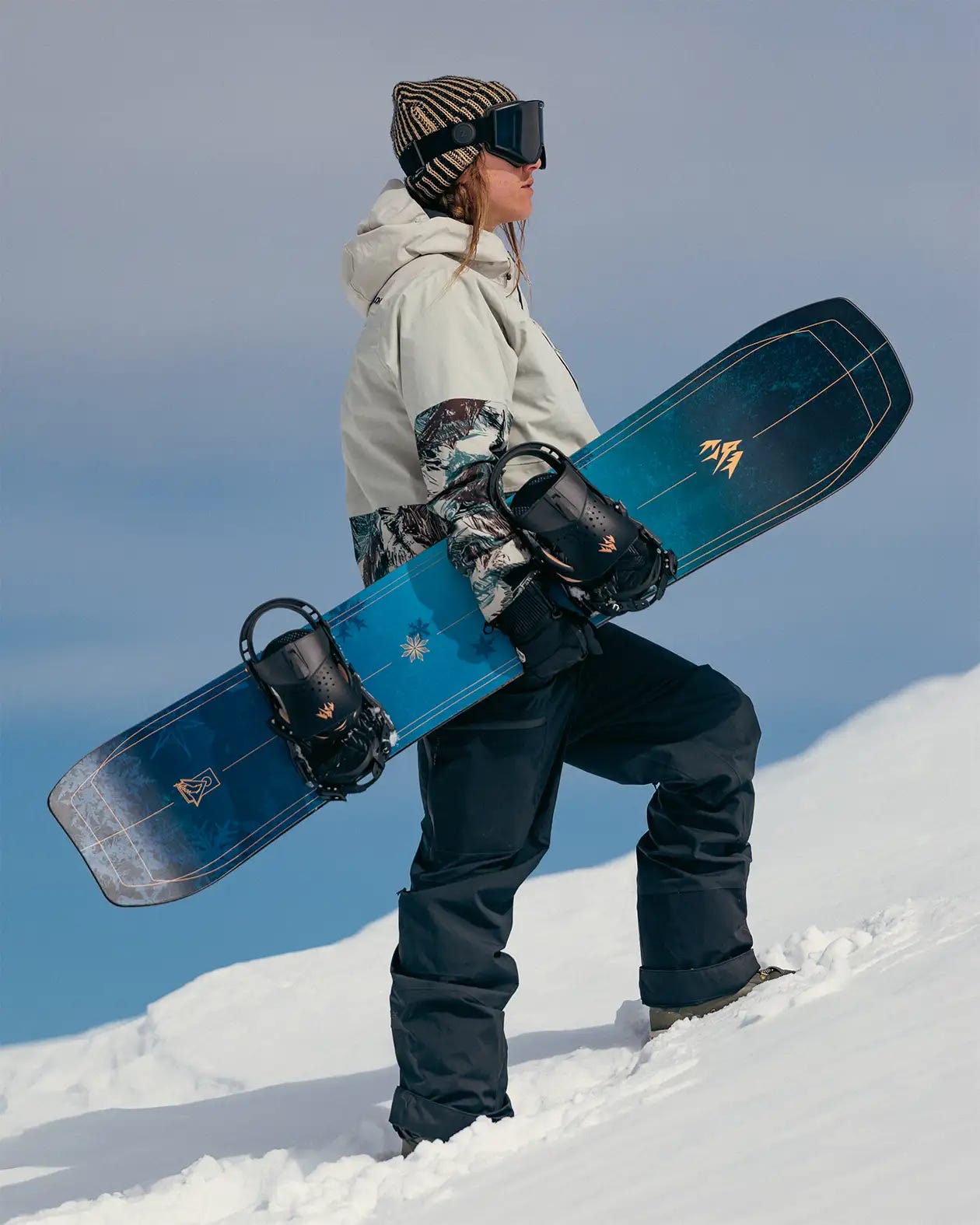
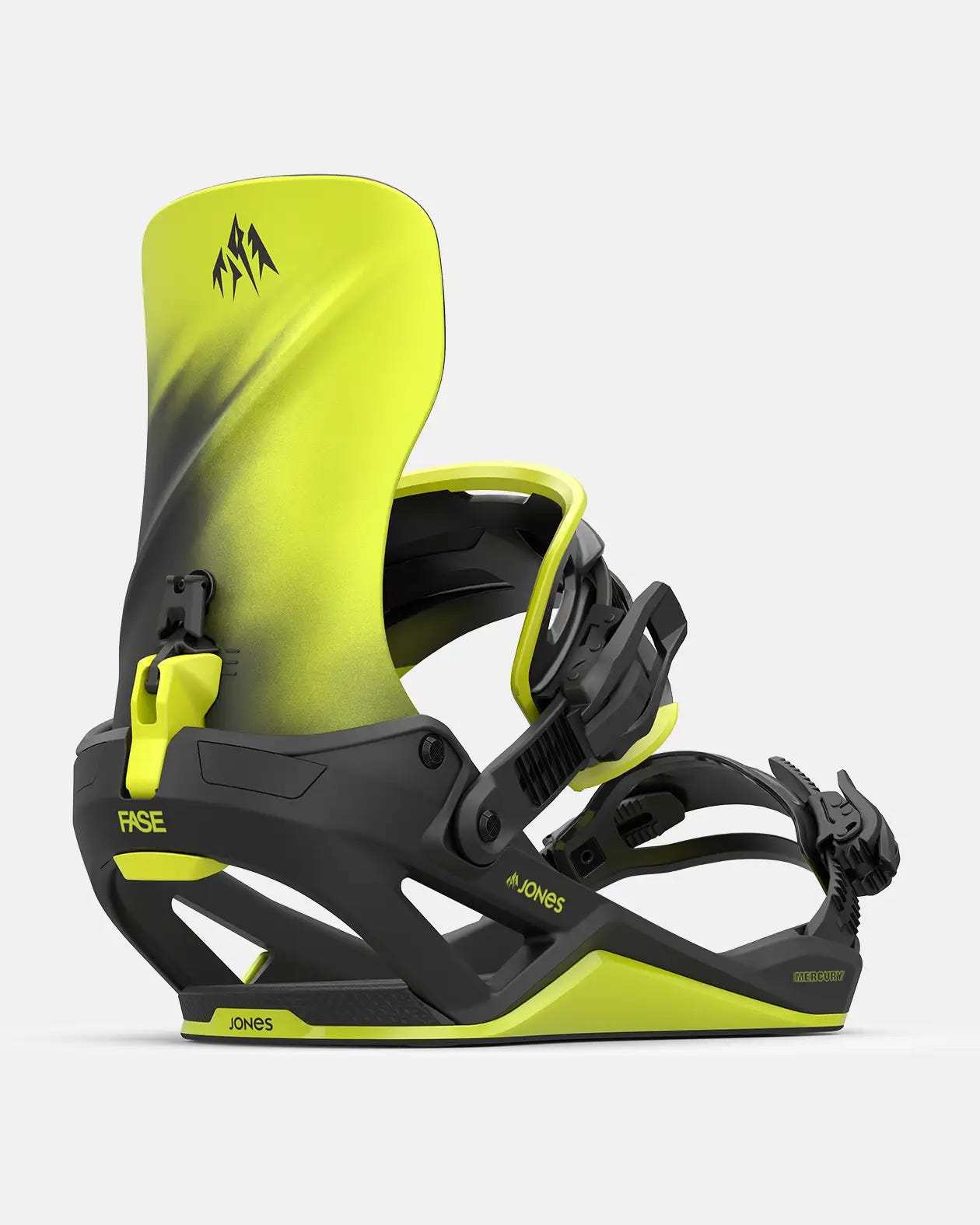
The FASE system is Jones’ answer to a question the industry has been fussing over for a while: how do you get the locked-in feel and performance of a traditional two-strap binding without the chairlift shuffle and morning-cold fingers struggling with ratchets? Their answer is the FASE Fast Entry System, and it’s a legitimately clever piece of engineering rather than a gimmick.
Here’s the honest truth though: there’s a break-in period. Out of the box, the entry and exit feels a bit stiff and deliberate. It takes a few sessions before the mechanism loosens up and the whole slide-in, snap-down motion starts to feel as quick and natural as Jones promises. Once it clicks, though, it actually does what they say. Getting off the lift and dropping in without stopping to strap your rear foot is one of those small quality-of-life things that you don’t fully appreciate until you go back to a traditional binding and realize you’ve been wasting time for years.
Performance-wise, the Mercury FASE is a solid all-mountain binding. Medium-stiff flex (4/5), asymmetrical AsymFlex highback that gives you edge drive on hard carves but enough give to tweak a grab without feeling like you’re fighting the setup. The Fusion XR baseplate sits low-profile and has a natural flex underfoot that doesn’t kill the board feel. The DualFlex ankle strap is one of the better ones out there, stiff enough in the core for responsiveness, softer at the edges for all-day comfort. Weight comes in at 895 grams for a medium, right in line with other premium two-straps.
The universal mount disc works with 4x4, 2x4, and channel setups, so it pairs with anything. The FASE system itself comes with a lifetime warranty.
MSRP: $369.95 | jonessnowboards.com
The Last Word
Paired together, the Howler and Mercury FASE make a genuinely capable all-mountain setup. The Howler is confident enough to point it somewhere serious but forgiving enough that you’re not fighting it when the terrain gets casual. The FASE bindings reward patience out of the box; put in a few days and you’ll wonder why strap-in systems took this long to evolve. Both pieces are built with real material and construction thoughtfulness, not just marketing copy, which matters when you’re evaluating gear from behind thirty-plus years of industry experience rather than a press release.