


As the world turns its attention to the Winter Olympics, feeds will flood with glossy montages of gold medals and perfectly groomed halfpipes. But for those who know where to look, the real story isn’t happening on the podium. It’s unfolding on the wind-whipped trails of Sugarloaf.
For champions, snowboarding is less about being noticed and more about being forged. It’s built through environments that demand obsession, focus, and relentless time on snow. And when the world watches the best drop in this month, the conversation inevitably circles back to Carrabassett Valley Academy (CVA).
CVA has become synonymous with a certain kind of mastery. Riders who emerge from its ranks carry an edge not measured in social media likes or sponsor contracts, but in precision, intelligence, and an instinctive understanding of their equipment. This is where talent meets infrastructure, and ambition meets opportunity.
Alumni Spotlight: The Maine-Forged Edge
While Olympic broadcasts highlight flash and spectacle, insiders know where true technical riders are bred: The Loaf. CVA alumni don’t simply appear on podiums. They’re built from years navigating some of the most variable, unforgiving terrain on the East Coast. From legendary pioneers to era-defining icons like Seth Wescott, the CVA lineage is defined by precision, resilience, and a relentless attention to detail.
“CVA isn’t just about learning how to win; it’s about learning how to ride. When you spend your formative years negotiating Maine’s fickle snow, you develop a level of edge control and spatial awareness that becomes a permanent advantage,” says one alumnus.
It’s a distinctive philosophy. Riders learn to read conditions, anticipate changes, and respond in real time. They don’t chase trends—they chase excellence.
Shaping the Sport: The Jeremy Jones Proof Point
CVA’s influence on snowboarding isn’t limited to start gates and finish lines. It extends into the very way the sport understands terrain, consequence, and responsibility.
Jeremy Jones ’93 is one of the most consequential snowboarders in the sport’s evolution. An 11-time Big Mountain Rider of the Year, Jones helped define what technical mastery looks like in consequential terrain. His riding elevated big-mountain lines from spectacle to discipline, emphasizing preparation, line choice, and respect for the mountain.
Jones is also the founder of Protect Our Winters (POW), one of the most influential climate advocacy organizations in action sports. Through POW, he’s connected the technical understanding of snow and terrain with stewardship, ensuring those who follow have winters worth riding. His path underscores a broader CVA truth: mastery doesn’t end at the podium. It extends into leadership, longevity, and responsibility. The same technical foundation that produces Olympic champions also produces riders capable of shaping the culture itself.
Beyond the Podium: The CVA Difference
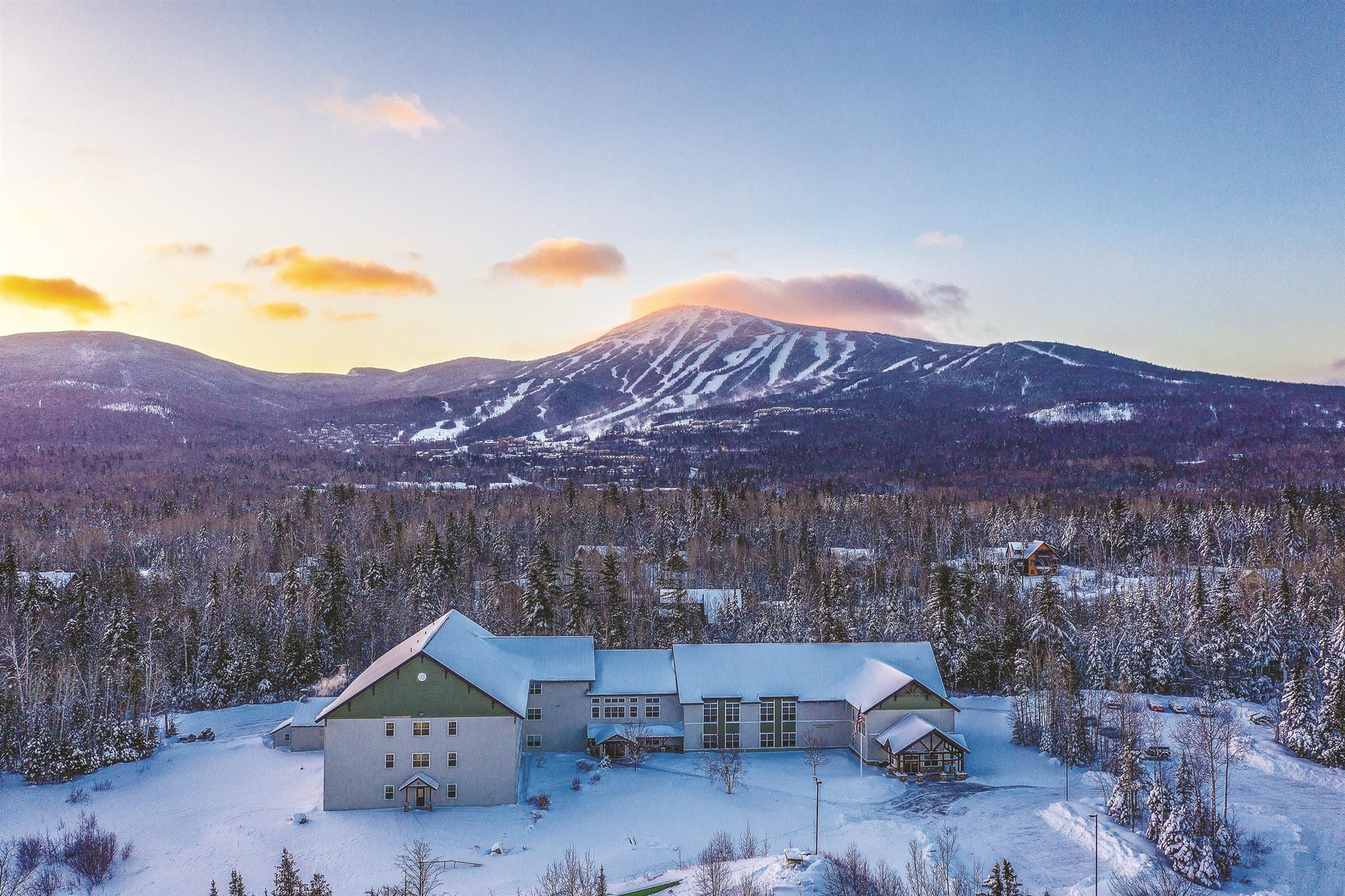
CVA is more than a school. It’s a high-fidelity training ground for athletes serious about their craft. While the world waits for the Olympic cycle to care about snowboarding, the crew in Maine is grinding, season over season.
At its core, this is about community. A binding culture that understands the importance of roots and lineage. CVA stands as the Independent Guard of competitive snowboarding, guided by three core pillars:
The Laboratory of Sugarloaf
Riding the Loaf demands a level of precision and articulation that is unmatched in softer Western resorts. Here, the mountain is the ultimate arbiter of skill. It doesn’t care about followers or highlight reels. It only cares about the edge you hold, the line you carve, and the control you exhibit.Academic Rigor Meets Alpine Grit
This isn’t a casual gap year or some dirtbag sabbatical. CVA offers a college-prep curriculum alongside a world-class training program. The mind and body are sharpened simultaneously. Riders emerge not just as athletes, but as disciplined, well-rounded individuals capable of performing under pressure.The Technical Craft
At CVA, gear isn’t fit and drip; it’s an extension of the rider. Understanding sidecut radius, core profiles, and base structure isn’t academic. It’s functional. Mastery of equipment translates directly to control, speed, and performance. It’s the difference between a podium finish and a DNF.
The Chess Match at Speed: The SBX Factor
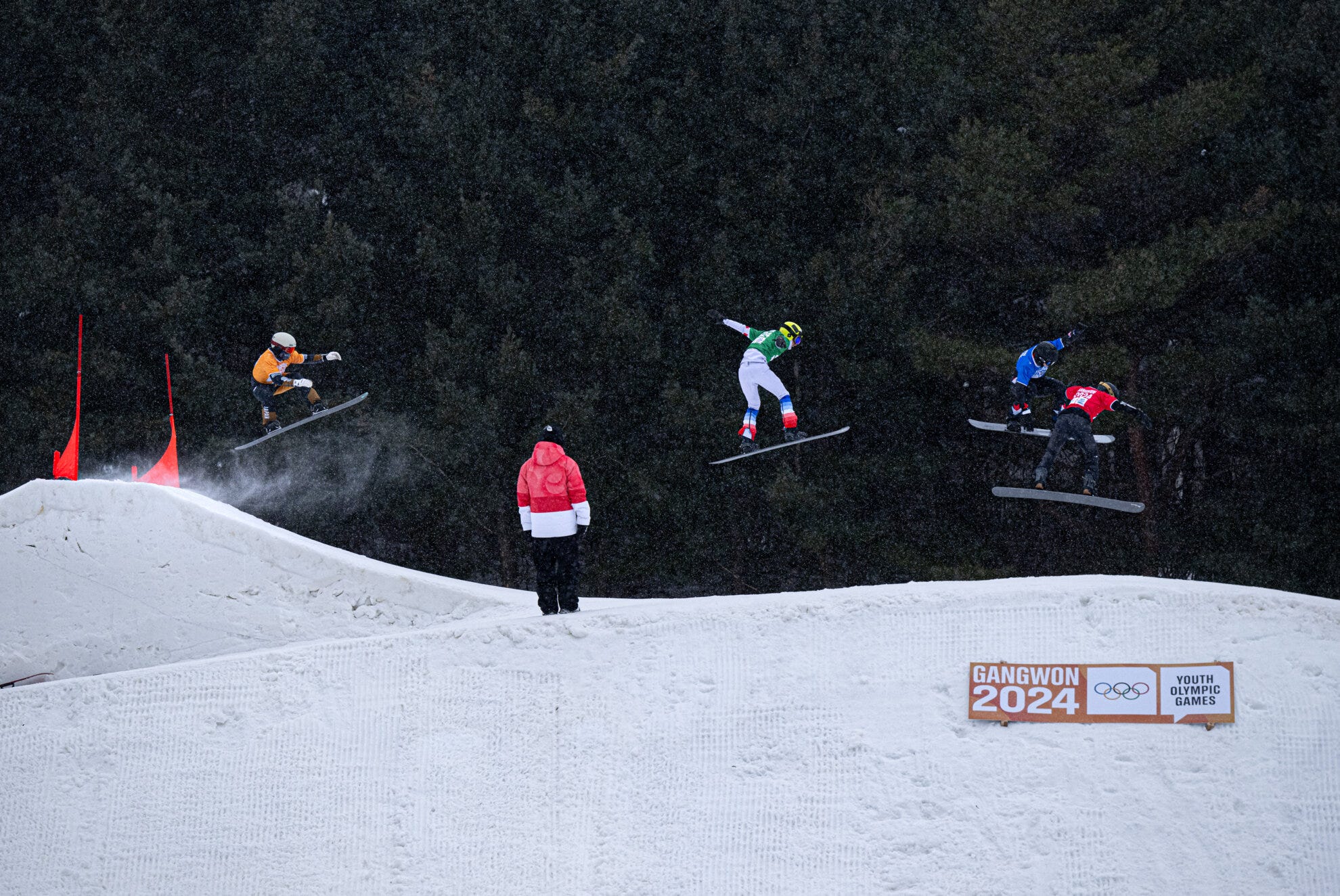
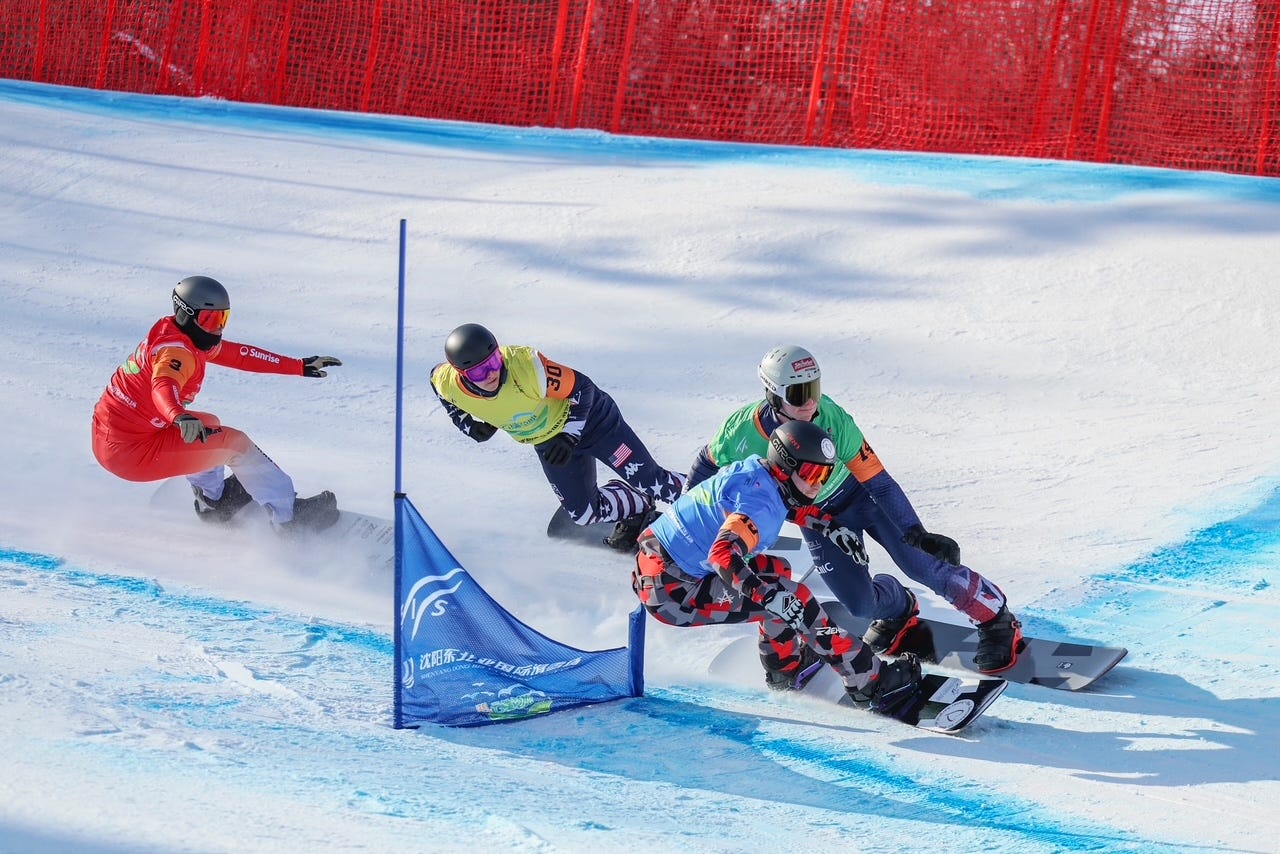
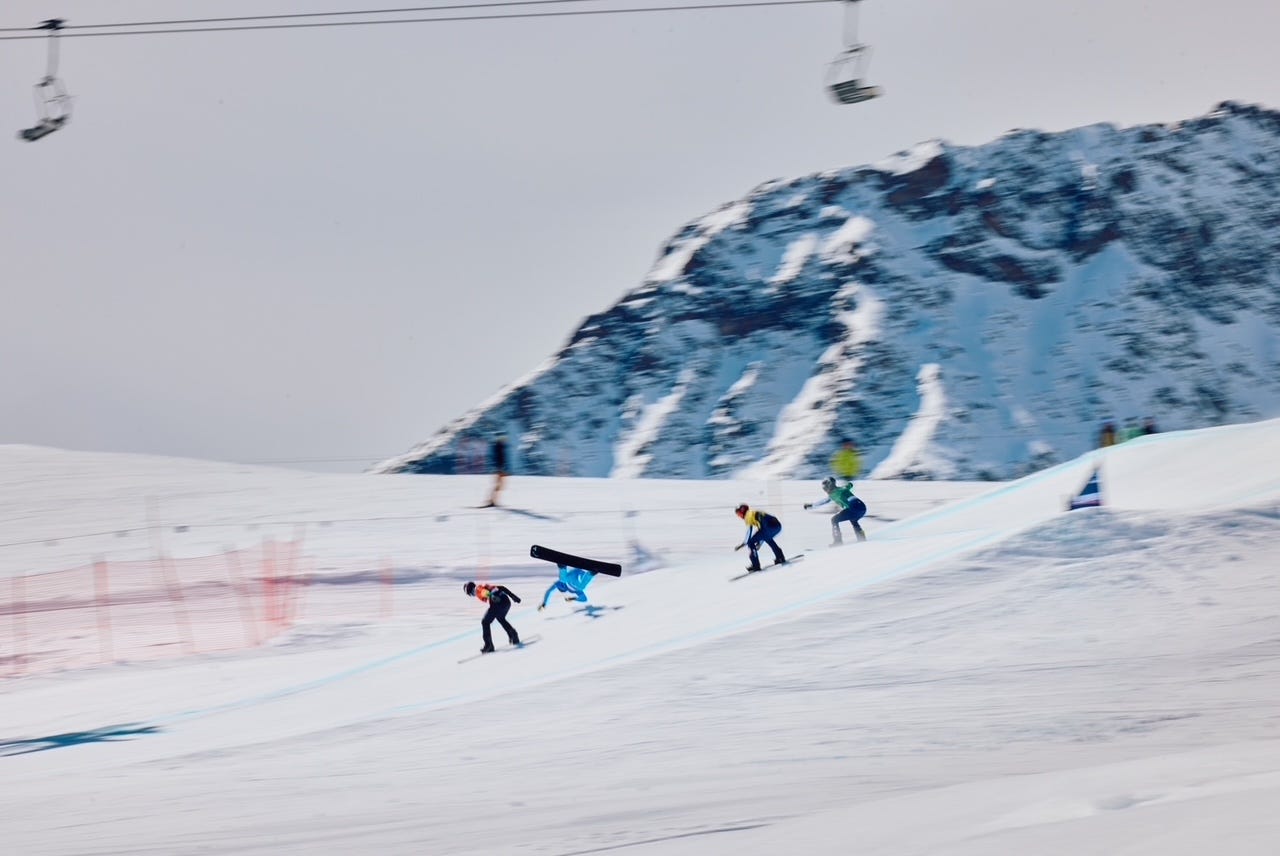
Halfpipe and slopestyle earn the slow-motion replays, but for those who value pure technical truth, Boardercross (SBX) is the ultimate test. It demands explosive power, carving finesse, and tactical intelligence all at once. Every race is a chess match at 50 mph. CVA riders spend their seasons learning to maintain control on firm, variable terrain, threading lines that would unseat lesser competitors.
SBX is objective. The clock and the finish line do not care about popularity, style points, or social reach. Riders who have mastered the line and found the gap move forward. It’s a meritocracy built on performance, not perception.
The Hole Shot: By the Numbers
Olympic dreams are often sold as lottery tickets … a world of subjective judging and sponsor influence. In freestyle, the field is crowded, trends shift, and “flavor of the week” tricks dominate. SBX offers a different path. The high barrier to entry and the emphasis on technical skill make the field smaller, more focused, and more meritocratic.
Training at an academy with a dedicated track and elite coaching doesn’t guarantee fame—it guarantees preparation. CVA athletes take the hole shot knowing they own their path to the world stage.
CVA’s Snowboarding Lineage
If the hole shot represents control over your own destiny, CVA’s Olympic history shows what that control looks like over time.
CVA’s impact on Olympic snowboarding didn’t happen overnight. It was built turn by turn, season by season, on firm snow and harder lessons. Long before snowboard cross became a headline event, CVA riders were already shaping what competitive snowboarding would look like on the world stage.
The academy’s Olympic history reflects both the evolution of the sport and CVA’s ability to stay relevant over decades:
Mark Fawcett ’90 | Olympic competitor in 1998 and 2002, representing the formative period of snowboard racing and competitive progression.
Adam Hostetter ’93 | 1998 Olympian, part of the first wave of CVA riders translating East Coast discipline to the global stage.
Jeff Greenwood ’94 | 2002 Olympian, known for speed, consistency, and race intelligence.
Seth Wescott ’94 | Olympic gold medalist in 2006 and 2010, the most visible proof point of CVA’s foundational approach paying off at the highest level.
From the sport’s early Olympic days to the modern era of snowboard cross, CVA’s riders share a common thread. They aren’t relying on subjectivity or timing. They’re prepared to perform when the gate drops.
And when the next heat loads, that lineage isn’t history. It’s live.
Boardercross at the Winter Olympics: West / East Coast Viewing Schedule
For fans on the West Coast, catching the SBX action live requires some early mornings—but it’s worth it.
Here’s the lineup:
Men’s Boardercross Qualifiers: February 9, 7:00 AM PST / 10 AM EST
The first rounds set the tone. Watch carefully to see which riders take the early “hole shots” and assert control through the variable courses.
Women’s Boardercross Qualifiers: February 10, 7:30 AM PST / 10:30 AM EST
A tight field and lightning-fast pack racing. Ideal for studying line choice and edge precision in real time.
Men’s Boardercross Finals: February 12, 6:00 AM PST / 9:00 AM EST
The elite riders clash head-to-head. Expect split-second decision-making and textbook edge control under pressure.
Women’s Boardercross Finals: February 13, 6:30 AM PST / 9:30 AM EST
Where speed meets strategy. This is the moment to see which athletes have honed both precision and power throughout the season.
Mixed Relay SBX: February 15, 8:00 AM PST / 11 AM EST
Teams combine explosive starts, carving finesse, and tactical intelligence. Watch the gap strategy unfold as athletes push to the finish line.
Pro tip: Set DVRs or streaming reminders. Boardercross moves fast, but the lessons in line strategy and control are worth the early wake-up call.
U.S. SBX Athletes to Watch at Milano-Cortina
With Olympic rosters set, snowboard cross at Milano-Cortina will showcase the sport’s full spectrum: legacy racers, proven contenders, and the next generation of precision athletes. Each of the riders below arrives at the start gate with a background built for speed, consequence, and control.
Nate Pare (*CVA Post-Graduate Class of 2024)
Competing at the 2026 Winter Games, Pare represents the newest generation of U.S. snowboard cross athletes. His inclusion signals continued momentum as the discipline evolves on the world stage.Nick Baumgartner
A four-time Olympian (2010, 2014, 2018, 2022) and mixed team gold medalist, Baumgartner remains one of the most battle-tested racers in snowboard cross. His longevity and race intelligence continue to define elite SBX performance.Faye Thelen
A four-time Olympian (2010, 2014, 2018, 2022), Thelen brings unmatched experience to the women’s field. Her sustained presence at the Olympic level reflects durability, composure, and technical discipline under pressure.Liam Moffatt (*CVA Class of 2015)
An Olympic competitor in 2022 and returning in 2026, Moffatt spans Olympic cycles with consistency and control. His trajectory reflects adaptability across changing courses, formats, and race dynamics.Jake Vedder
A 2022 Olympian known for explosive starts and calculated line selection, Vedder represents the modern SBX racer. His approach balances aggression with precision in head-to-head competition.Cody Winters
Also a member of the 2022 Olympic team, Winters adds depth and intensity to the U.S. field. His reputation for attacking variable terrain makes him a constant presence in fast, physical heats.Stacy Gaskill
A 2022 Olympian, Gaskill exemplifies the strength of the U.S. women’s snowboard cross program. Her racing emphasizes speed management, tactical awareness, and execution when margins disappear.Hanna Percy
A member of the 2026 U.S. Olympic team, Percy enters the Games as part of the next wave of American SBX talent. Her rise reflects consistency, edge control, and decision-making at speed.Brianna Schnorrbusch
Selected for the 2026 Olympic roster, Schnorrbusch brings a composed, analytical approach to pack racing. Her progression highlights the importance of precision and patience in high-variance competition.
Join the Ranks
Enrollment at Carrabassett Valley Academy is more than a choice; it’s an invitation into a lineage. It’s for riders who understand the Chairlift Code, respect the craft of their kit, and value days on snow above everything else.
From judged formats to head-to-head competition, snowboard pathways diverge quickly. CVA has long aligned with the path where preparation and execution decide the outcome.